
Đề thi Anh THPT năm 2025 (Mã 1102) - có lời giải chi tiết
Xem trước nội dung
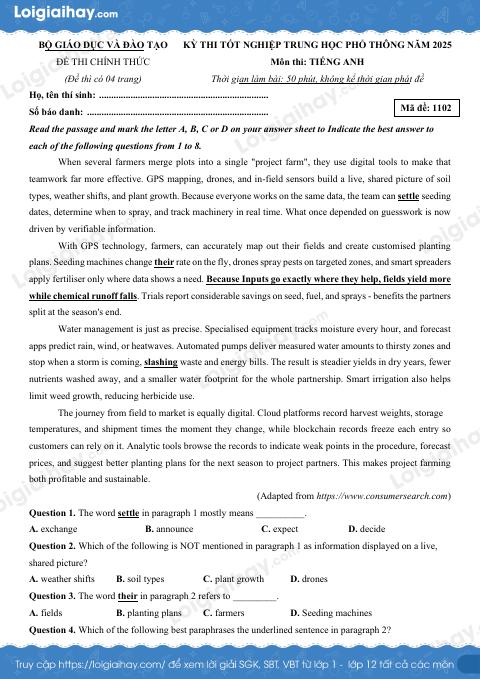
BỘ GIÁO DỤC VÀ ĐÀO TẠO
ĐỀ THI CHÍNH THỨC
(Đề thì có 04 trang)
KỲ THI TỐT NGHIỆP TRUNG HỌC PHỔ THÔNG NĂM 2025
Môn thi: TIẾNG ANH
Thời gian làm bài: 50 phút, không kể thời gian phát đề
Họ, tên thí sinh: ......................................................................
Số báo danh: ...........................................................................
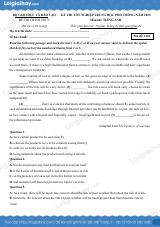
Read the passage and mark the letter A, B, C or D on your answer sheet to Indicate the best answer to
each of the following questions from 1 to 8.
When several farmers merge plots into a single "project farm", they use digital tools to make that
teamwork far more effective. GPS mapping, drones, and in-field sensors build a live, shared picture of soil
types, weather shifts, and plant growth. Because everyone works on the same data, the team can settle seeding
dates, determine when to spray, and track machinery in real time. What once depended on guesswork is now
driven by verifiable information.
With GPS technology, farmers, can accurately map out their fields and create customised planting
plans. Seeding machines change their rate on the fly, drones spray pests on targeted zones, and smart spreaders
apply fertiliser only where data shows a need. Because Inputs go exactly where they help, fields yield more
while chemical runoff falls. Trials report considerable savings on seed, fuel, and sprays - benefits the partners
split at the season's end.
Water management is just as precise. Specialised equipment tracks moisture every hour, and forecast
apps predict rain, wind, or heatwaves. Automated pumps deliver measured water amounts to thirsty zones and
stop when a storm is coming, slashing waste and energy bills. The result is steadier yields in dry years, fewer
nutrients washed away, and a smaller water footprint for the whole partnership. Smart irrigation also helps
limit weed growth, reducing herbicide use.
The journey from field to market is equally digital. Cloud platforms record harvest weights, storage
temperatures, and shipment times the moment they change, while blockchain records freeze each entry so
customers can rely on it. Analytic tools browse the records to indicate weak points in the procedure, forecast
prices, and suggest better planting plans for the next season to project partners. This makes project farming
both profitable and sustainable.
(Adapted from https://www.consumersearch.com)
Question 1. The word settle in paragraph 1 mostly means __________.
A. exchange B. announce C. expect D. decide
Question 2. Which of the following is NOT mentioned in paragraph 1 as information displayed on a live,
shared picture?
A. weather shifts B. soil types C. plant growth D. drones
Question 3. The word their in paragraph 2 refers to _________.
A. fields B. planting plans C. farmers D. Seeding machines
Question 4. Which of the following best paraphrases the underlined sentence in paragraph 2?
Mã đề: 1102
A. As resources are directed to the areas that need them, harvests increase and pollution from excess
chemicals declines.
B. When chemicals are placed only where they are needed, productivity increases yet more overdue
chemicals are released.
C. Precise application of fertilisers and sprays to required areas raises crop output but in tum increases
chemical wastage.
D. There is an increase in chemical wastage and crop output though fewer resources are used for the
indicated land area.
Question 5. The word slashing in paragraph 3 is OPPOSITE in meaning to ________.
A. disposing B. converting C. increasing D. reducing
Question 6. Which of the following is TRUE according to paragraph 4?
A. Buyers have little reliable information on harvest weights and storage temperatures.
B. Farmers regard cloud platforms the best tools to improve the quality of their crops.
C. Project partners are unable to forecast prices of crops in the following season.
D. Analytic tools offer suggestions for better planting plans for the following …
Trên đây là phần đầu tài liệu — bấm Đọc sách để xem đầy đủ.

.png "10 Đề Thi Thử TN THPT 2021 Tiếng Anh Theo Đề Minh Họa Có Lời Giải Chi Tiết Và Đáp Án (Bộ 2)")