
Đề cương ôn tập Giữa kì 2 Tiếng Anh 11 năm 2025–2026 trường THPT Đào Sơn Tây (TP Hồ Chí Minh)
Xem trước nội dung
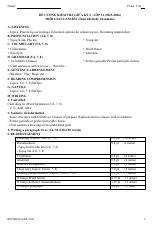
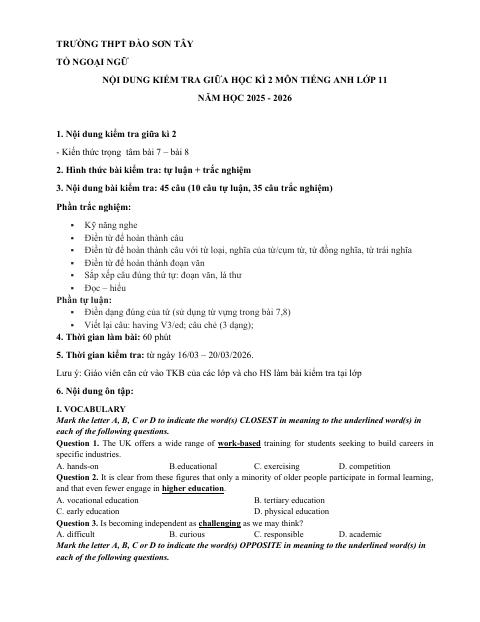
TRƯỜNG THPT ĐÀO SƠN TÂY
TỔ NGOẠI NGỮ
NỘI DUNG KIỂM TRA GIỮA HỌC KÌ 2 MÔN TIẾNG ANH LỚP 11
NĂM HỌC 2025 - 2026
1. Nội dung kiểm tra giữa kì 2
- Kiến thức trọng tâm bài 7 – bài 8
2. Hình thức bài kiểm tra: tự luận + trắc nghiệm
3. Nội dung bài kiểm tra: 45 câu (10 câu tự luận, 35 câu trắc nghiệm)
Phần trắc nghiệm:
▪ Kỹ năng nghe
▪ Điền từ để hoàn thành câu
▪ Điền từ để hoàn thành câu với từ loại, nghĩa của từ/cụm từ, từ đồng nghĩa, từ trái nghĩa
▪ Điền từ để hoàn thành đoạn văn
▪ Sắp xếp câu đúng thứ tự: đoạn văn, lá thư
▪ Đọc – hiểu Phần tự luận:
▪ Điền dạng đúng của từ (sử dụng từ vựng trong bài 7,8)
▪ Viết lại câu: having V3/ed; câu chẻ (3 dạng); 4. Thời gian làm bài: 60 phút
5. Thời gian kiểm tra: từ ngày 16/03 – 20/03/2026.
Lưu ý: Giáo viên căn cứ vào TKB của các lớp và cho HS làm bài kiểm tra tại lớp
6. Nội dung ôn tập:
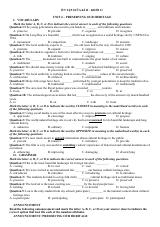
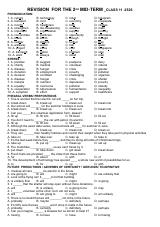
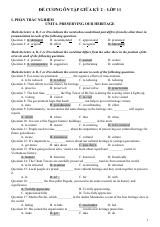
I. VOCABULARY Mark the letter A, B, C or D to indicate the word(s) CLOSEST in meaning to the underlined word(s) in each of the following questions. Question 1. The UK offers a wide range of work-based training for students seeking to build careers in specific industries. A. hands-on B.educational C. exercising D. competition Question 2. It is clear from these figures that only a minority of older people participate in formal learning, and that even fewer engage in higher education. A. vocational education B. tertiary education C. early education D. physical education Question 3. Is becoming independent as challenging as we may think? A. difficult B. curious C. responsible D. academic Mark the letter A, B, C or D to indicate the word(s) OPPOSITE in meaning to the underlined word(s) in each of the following questions.
Question 4. A Bachelor's degree is also known as a first university degree or an undergraduate degree. A. last B. major C. main D. ordinary Question 5. The teachers at Edinburgh College encourage students to collaborate with with others, experiment arts and find their own ideas. A. help B. improve C. involve D. separate Question 6. They do part-time jobs to gain work experience and learn how to manage money. A. mismanage B. lose C. plan D. provide Mark the letter A, B, C, or D on your answer sheet to indicate the correct answer to each of the following questions. Question 7. After completing their vocational courses, students are offered four-month __________ to learn from skilled people in the trade. A. education B. apprenticeships C. courses D. breaks Question 8. They are considering the problem of rising unemployment among ________. A. school-leavers B. school goers C. schoolmates D. schoolkids Question 9. The Swedes regard_________training as a part of a young person's education. A. work B. occupation C. vocation D. vocational Question 10. You can better organise your school activities by _______time management tools, such as apps or diaries A. getting into the habit of B. coming up with C. carrying out D. making use of Question 11. My parents have always allowed me some _________ . A. depend B. dependent C. independent D. independence Question 12. I’ve gained my parents’ trust, and they believe that I’m ______ when I’m out and about. A. irresponsible B. responsibly C. responsibility D. responsible Question 13. After a long discussion, we _________some amazing ideas for our school party. A. got into the habit of B. came up with C. carried out D. made use of Question 14. Babysitting and dog walking are good ___________ for teenager. A. difficulties B. chores C. part-time jobs D. life skills Question 15. Students who study online may have difficulty ________ with their classmates. A. developing relationship B. managing money C. challenging D. studying well II. GRAMMAR Mark the letter A, B, C, or D on your answer sheet to indicate the correct answer to each of the following questions. Question 1. Humans do harm to the environment by_________atmospheric carbon dioxide concentration by a third since the Industrial Revolution began. A. increased B. having increased C. having …
Trên đây là phần đầu tài liệu — bấm Đọc sách để xem đầy đủ.