
Đề thi Giữa kì 2 Tiếng Anh 11 năm 2025-2026 trường THPT Số 1 Lê Hồng Phong (Đắk Lắk)
Xem trước nội dung
1/4 – Mã đề 1301
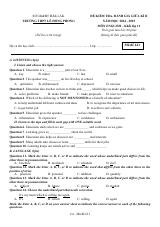
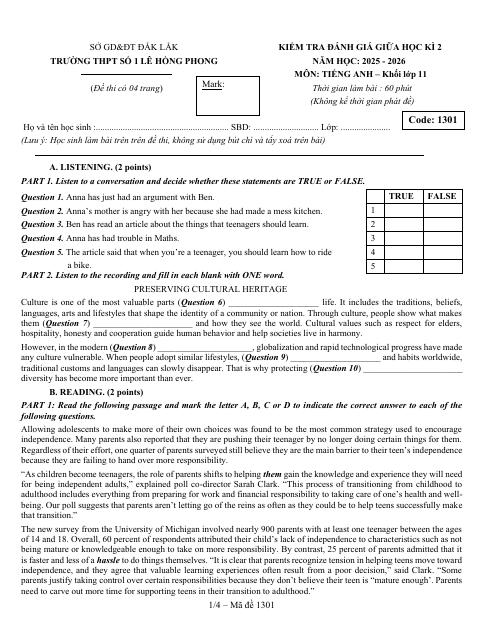
SỞ GD&ĐT ĐẮK LẮK
TRƯỜNG THPT SỐ 1 LÊ HỒNG PHONG
(Đề thi có 04 trang)
KIỂM TRA ĐÁNH GIÁ GIỮA HỌC KÌ 2
NĂM HỌC: 2025 - 2026 MÔN: TIẾNG ANH – Khối lớp 11 Thời gian làm bài : 60 phút (Không kể thời gian phát đề)
Họ và tên học sinh :........................................................... SBD: ............................. Lớp: ......................
(Lưu ý: Học sinh làm bài trên trên đề thi, không sử dụng bút chì và tẩy xoá trên bài)
A. LISTENING. (2 points) PART 1. Listen to a conversation and decide whether these statements are TRUE or FALSE.
Question 1. Anna has just had an argument with Ben. Question 2. Anna’s mother is angry with her because she had made a mess kitchen.
Question 3. Ben has read an article about the things that teenagers should learn. Question 4. Anna has had trouble in Maths. Question 5. The article said that when you’re a teenager, you should learn how to ride
a bike. PART 2. Listen to the recording and fill in each blank with ONE word.
PRESERVING CULTURAL HERITAGE Culture is one of the most valuable parts (Question 6) ____________________ life. It includes the traditions, beliefs, languages, arts and lifestyles that shape the identity of a community or nation. Through culture, people show what makes them (Question 7) ______________________ and how they see the world. Cultural values such as respect for elders, hospitality, honesty and cooperation guide human behavior and help societies live in harmony. However, in the modern (Question 8) _____________________, globalization and rapid technological progress have made any culture vulnerable. When people adopt similar lifestyles, (Question 9) ____________________ and habits worldwide, traditional customs and languages can slowly disappear. That is why protecting (Question 10) ______________________ diversity has become more important than ever.
B. READING. (2 points) PART 1: Read the following passage and mark the letter A, B, C or D to indicate the correct answer to each of the following questions. Allowing adolescents to make more of their own choices was found to be the most common strategy used to encourage independence. Many parents also reported that they are pushing their teenager by no longer doing certain things for them. Regardless of their effort, one quarter of parents surveyed still believe they are the main barrier to their teen’s independence because they are failing to hand over more responsibility. “As children become teenagers, the role of parents shifts to helping them gain the knowledge and experience they will need for being independent adults,” explained poll co-director Sarah Clark. “This process of transitioning from childhood to adulthood includes everything from preparing for work and financial responsibility to taking care of one’s health and well- being. Our poll suggests that parents aren’t letting go of the reins as often as they could be to help teens successfully make that transition.” The new survey from the University of Michigan involved nearly 900 parents with at least one teenager between the ages of 14 and 18. Overall, 60 percent of respondents attributed their child’s lack of independence to characteristics such as not being mature or knowledgeable enough to take on more responsibility. By contrast, 25 percent of parents admitted that it is faster and less of a hassle to do things themselves. “It is clear that parents recognize tension in helping teens move toward independence, and they agree that valuable learning experiences often result from a poor decision,” said Clark. “Some parents justify taking control over certain responsibilities because they don’t believe their teen is “mature enough’. Parents need to carve out more time for supporting teens in their transition to adulthood.”
TRUE FALSE
1
2
3
4
5
Code: 1301
Mark:
Trên đây là phần đầu tài liệu — bấm Đọc sách để xem đầy đủ.