

.jpg)

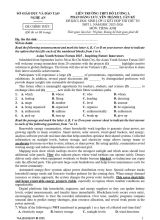
Đề thi thử THPT Quốc gia cho học sinh Lớp 12 THPT, BT THPT môn Tiếng Anh - Mã đề 656 - Năm học 2016-2017 - Sở GD & ĐT Ninh Bình (Có đáp án)
Xem trước nội dung
Trang 1/4 - Mã đề thi 656
SỞ GIÁO DỤC VÀ ĐÀO TẠO TỈNH NINH BÌNH
(Đề thi gồm có 04 trang)
ĐỀ THI THỬ THPT QUỐC GIA CHO HỌC SINH (HỌC VIÊN) LỚP 12 THPT, BT THPT
NĂM HỌC 2016-2017
Môn: TIẾNG ANH Thời gian làm bài: 60 phút, không kể thời gian phát đề
Họ tên thí sinh: ............................................; Số báo danh: ......................................
Mark the letter A, B, C or D on your answer sheet to indicate the sentence that best combines each pair of sentences in the following questions. Question 1: Anne jogs every morning. It is very good for her health.
A. Anne jogs every morning and then it is very good for her health. B. Anne jogs every morning that it is very good for her health. C. Anne jogs every morning and is very good for her health. D. Anne jogs every morning, which is very good for her health. Question 2: I did not read his book. I did not understand what the lecturer was saying.
A. I found it very difficult to understand what the lecturer said in his book. B. The lecturer's book which I had not read was difficult to understand. C. I would have understood what the lecturer was saying if I had read his book. D. What the lecturer wrote and said was too difficult for me to understand.
Read the following passage and mark the letter A, B,C or D on your answer sheet to indicate the correct answer to each of the questions.
One question that is being debated these days is whether or not genetic engineering is a good thing. We hear this term “genetic engineering” with increasing frequency. For those readers who may not be sure of its meaning, some definitions follow. When we speak of genes, we are referring to chemical substances in the cells of all living things that establish an organism’s characteristics. Genetic engineering is the changing of certain genes, usually to improve an organism in some way. In recent years, for example, certain genes have been placed in tomato plants to make tomatoes taste better and keep them fresh in supermarkets for a longer time. Cows have been treated with a growth hormone that makes dairy cattle give more milk and reduces the amount of fat in the meat of beef cattle. These sound like positive things, don’t they? After all, many people say, the technology exists to improve our lives.
But there are plenty of people around who oppose genetic engineering. Why? Two specific objections come to mind. One is that the balance of nature might be upset. Suppose, for example, that scientists are able to genetically engineer certain plants so that insects will not eat them. This will protect the plants, but the insects will be deprived of a food supply — and other animals that depend on those insects for food will lose their food supply, too. The other objection is a moral question. Is it acceptable or right for us to change the makeup of living things?
Supporters of genetic engineering say the benefits outweigh the dangers. Look at all the improvements that can be made in plants raised for food, they say. Because of genetic engineering, plants that produce more fruits and vegetables and resist disease can be grown. In a world where more and more food will be needed in the future, this is a benefit. The medical advances provided by genetic engineering, say the supporters, are even more impressive. Consider cancer, for example. If genetic engineering can provide a way to cure or prevent this disease, shouldn’t it be used? And if genetic engineering can be used to kill the virus that causes AIDS, shouldn’t it be permitted?
Opponents of genetic engineering say it should be stopped, or at least limited. Proponents of genetic engineering say it should be promoted and expanded. The debate goes on. Question 3: What is TRUE about genetic engineering, according to paragraph 1?
A. It increases people’s age. B. It changes genes’ parameters. C. It reduces the number of cells. D. It improves fat in the meat. Question 4: Genetic engineering is said to be aimed at ______.
A. …
Trên đây là phần đầu tài liệu — bấm Đọc sách để xem đầy đủ.

.jpg "Bộ đề thi thử môn Tiếng Anh THPT 2026 mới nhất (Có lời giải)")




 file word Co Dap An.jpg "Đề thi thử Tốt nghiệp THPT 2026 Tiếng Anh Bắc Giang (Form Mới) file word Có Đáp Án")
.jpg "Đề Thi Thử Tốt Nghiệp THPT 2026 Tiếng Anh THPT Yên Dũng 2, Bắc Ninh (Có Đáp Án)")
