
Đề cương ôn tập Tiếng anh lớp 6 - Trường THCS Suối Ngô
Xem trước nội dung
Suối Ngô
1
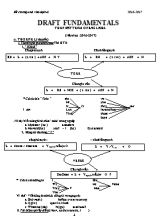
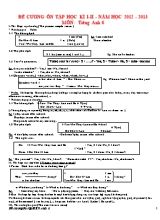
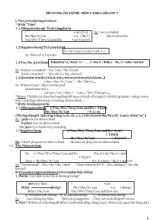
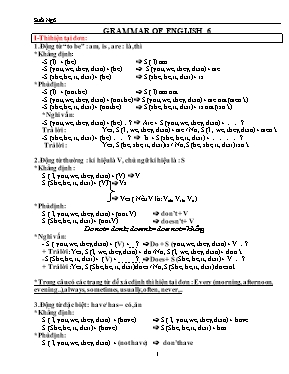
GRAMMAR OF ENGLISH 6 I-Thì hiện tại đơn: 1.Động từ “to be” : am, is , are : là, thì *Khẳng định: -S (I) + (be) S ( I) am -S (you, we, they, dtsn) + (be) S (you, we, they, dtsn) + are -S (she, he, it, dtsi) + (be) S (she, he, it, dtsi) + is *Phủ định: -S (I) + (not be) S ( I) am not -S (you, we, they, dtsn) + (not be) S (you, we, they, dtsn) + are not (aren’t) -S (she, he, it, dtsi) + (not be) S (she, he, it, dtsi) + is not (isn’t) *Nghi vấn: -S (you, we, they, dtsn) + (be)…? Are + S (you, we, they, dtsn) +…….? Trả lời : Yes, S (I , we, they, dtsn) + are / No, S (I , we, they, dtsn) + aren’t -S (she, he, it, dtsi) + (be)…… ? Is + S (she, he, it, dtsi) +…………..? Trả lời : Yes, S (he, she, it, dtsi) is / No, S (he, she, it, dtsi) isn’t
2.Động từ thường : kí hiệu là V, chủ ngữ kí hiệu là : S *Khẳng định : S ( I, you, we, they, dtsn) + (V) V S (She, he, it, dtsi) + (V) Vs
Ves ( Nếu V là: Vch, Vsh, Vo ) *Phủ định: S ( I, you, we, they, dtsn) + (not V) don’t + V S (She, he, it, dtsi) + (not V) doesn’t + V Do not = don’t ; doesn’t = does not = không *Nghi vấn: - S ( you, we, they, dtsn) + (V) + ? Do + S (you, we, they, dtsn) + V …? + Trả lời: Yes, S (I, we, they, dtsn) + do./ No, S (I, we, they, dtsn) + don’t. -S (She, he, it, dtsi) + (V) + ? Does + S (She, he, it, dtsi) + V ….? + Trả lời :Yes, S (She, he, it, dtsi) does./ No, S (She, he, it, dtsi) doesn’t
*Trong câu có các trạng từ để xác định thì hiện tại đơn : Every (morning, afternoon, evening..), always, sometimes, usually, often, never,..
3.Động từ đặc biệt : have/ has = có, ăn *Khẳng định: S ( I, you, we, they, dtsn) + (have) S ( I, you, we, they, dtsn) + have S (She, he, it, dtsi) + (have) S (She, he, it, dtsi) + has *Phủ định: S ( I, you, we, they, dtsn) + (not have) don’t have
ThuVienDeThi.com
Suối Ngô
2
S (She, he, it, dtsi) + ( not have) doesn’t have
*Nghi vấn: S ( you, we, they, dtsn) + (have) +….? Do + S ( you, we, they, dtsn) + have +….? + Trả lời :Yes, S (I, we, they, dtsn) + do./ No, S (I, we, they, dtsn) + don’t. S (She, he, it, dtsi) + (have) +…..? Does + S (She, he, it, dtsi) + have +…..? + Trả lời :Yes, S (She, he, it, dtsi) does./ No, S (She, he, it, dtsi) doesn’t II-Thì hiện tại tiếp diễn : Diễn tả hành động đang diễn ra ở hiện tại. *Khẳng định: -S( I) + (V) … S( I) am V-ing +…. -S(she, he, it, dtsi) + (V) …. S(she, he, it, dtsi) + is V-ing….. -S(you,we,they,dtsn) + (V)…. S(you,we,they,dtsn) + are + V-ing….. *Phủ định: -S( I) + (not V) ….. S( I) am not V-ing +…. -S(she, he, it, dtsi) + ( not V)… S(she, he, it, dtsi) + is not V-ing….. -S(you,we,they,dtsn) + ( not V).. S(you,we,they,dtsn) + are not V-ing….. *Nghi vấn: - S(she, he, it, dtsi) + (V) ….? Is + S(she, he, it, dtsi) + V-ing +….? + Trả lời :Yes, S + is / No, S + Isn’t - S(you,we,they,dtsn) + (V)………..? Are +S(you,we,they,dtsn) + V-ing…?. + Trả lời :Yes, S + are / No, S + aren’t. Các trạng từ xác định: Now, at the present,at the moment,today, sau dấu chấm than (!) @ Lưu ý : Động từ có 1 âm nhưng phía sau chỉ có 1 phụ âm duy nhất và liền kế trước phụ âm cũng có 1 trong những nguyên âm duy nhất thì thêm 1 phụ âm nữa sau đó thêm “ing” @ Động từ tận cùng là “e” bỏ “e” thêm “ing” III- Thì tương lai gần : Diễn tả 1 hành động sẽ làm, 1 kế hoạch trong tương lai. * Khẳng định: -S ( I ) + (V) +……… S ( I ) + am going to +V+……… -S(she, he, it, dtsi) + ( V)… S(she, he, it, dtsi) +is going to V… -S(you,we,they,dtsn) + (V).. S(you,we,they,dtsn) + are going to V….. * Phủ định. -S( I) + (not V) ….. S( I) am not going to V +…. -S(she, he, it, dtsi) + ( not V)… S(she, he, it, dtsi) + is not going to V…. -S(you,we,they,dtsn) + ( not V).. S(you,we,they,dtsn) + are not going to V.. * Nghi vấn: - S( she, he, it, dtsn) + (V)….? Is + S(she, he, it, dtsi) + going to V…. ? -S(you,we,they,dtsn) + (V).. ? Are + S(you,we,they,dtsn) + going to V…..? * Các trạng từ xác định : tomorrow, tonight, next (week, summer…) IV-Hỏi tên đồ vật: a-Danh từ số ít …
Trên đây là phần đầu tài liệu — bấm Đọc sách để xem đầy đủ.