
Đề cương ôn tập cả năm môn Tiếng Anh Lớp 6 - Năm học 2012-2013
Xem trước nội dung
Đề cương ôn tập HKII Anh 6 1
Tobe( Am/ Is / Are) + S + ......? - Yes, S + Tobe / - No, S + tobe +not not
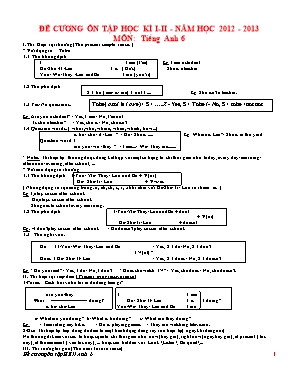
ĐỀ CƯƠNG ÔN TẬP HỌC KÌ I-II - NĂM HỌC 2012 - 2013
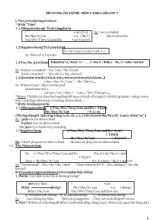
MÔN: Tiếng Anh 6 I. Thì Hiện tại thường (The present simple tense: ) * Với động từ "Tobe" 1.1 Thể khẳng định
I + am (I'm) Eg: I am a student He /She /It /Lan + is ( He's) She is a teacher You / We /They /Lan and Ba + are (you're)
1.2 Thể phủ định
S + be ( am/ is/ are) + not + .... Eg: She isn't a teacher.
1.3 Yes/ No questions:
Eg: Are you a student? - Yes, I am / No, I'm not Is she a teacher? - Yes, she is / No, she isn't 1.4 Question words: ( what, who, where, when, which, how...) is he / she / it / Lan ? - He / She is ..... Eg: Where is Lan?- She is in the yard Question word + are you / we / they ? - I am..../ We/ They are........
* Notes: Thì hiện tại thường được dùng kết hợp với một số trạng từ chỉ thời gian như: today, every day/ morning/ afternoon/ evening, after school, ... * Với các động từ thường 1.1 Thể khẳng định I/You/ We/ They/ Lan and Ba + V(nt) He/ She/ It/ Lan + V-s/ es ( Những động từ tận cùng bằng: o, ch, sh, s, x, z khi chia với He/She/ It/ Lan ta thêm "es") Eg: I play soccer after school. He plays soccer after school. She goes to school every morning. 1.2 Thể phủ định: I/You/ We/ They/ Lan and Ba + don't
+ V(nt) He/ She/ It/ Lan + doesn't Eg: -I don't play soccer after school. - He doesn't play soccer after school. 1.3 Thể nghi vấn:
Do + I/You/ We/ They/ Lan and Ba - Yes, S + do/ No, S + don't
+ V(nt) ? Does + He/ She/ It/ Lan - Yes, S + does / No, S + doesn't
Eg: *Do you read? - Yes, I do / No, I don't *Does she watch TV? - Yes, she does / No, she doesn't. II. Thì hiện tại tiếp diễn( Present progressive tense) 1/Form: Cách hỏi và trả lời ai đó đang làm gì? are you/ they I + am What doing? He / She/ It/ Lan + is + doing? is he/ she/ Lan You/ We/ They/ Lan and Ba + are a/ What are you doing? b/ What is he doing? c/ What are they doing? Eg: - Iam riding my bike. - He is playing games - They are watching television. 2/Use: Thì hiện tại tiếp dùng để diễn tả một hành động đang xảy ra ở hiện tại( ngay khi đang nói) Nó thường đi kèm với các từ hoặc cụm từ chỉ thời gian như: now (bây giờ), right now( ngay bây giờ), at present ( lúc này), at the moment ( vào lúc này), ... hoặc câu bát đầu với: Look!, Listen!, Be quiet!,... III. Thì tương lai gần( The near future tense)
ThuVienDeThi.com
Đề cương ôn tập HKII Anh 6 2
- Be going to ( sắp, sẽ, dự định)
1/ Form: S + be( am / is/ are) + going to + V(nt) Eg: I'm going to have breakfast at school
2/ Use: "Be going to" dùng để nói lên một dự định, một kể hoạch, hay một hành động sắp xảy ra trong tương lai gần nhất. Nó thường đi với các trạng từ hoặc cụm trạng từ chỉ thời gian như: tonight( tối nay), tomorrow( ngày mai), on the weekend( vào cuối tuần), next week/ month/ year, on Sunday, ... 3/ Question words with " Be going to" What Eg:: What are you going to do tomorrow? Where + be ( am / is/ are) + S + going to + inf ? Where are you going to stay? How long
* How long....?: dùng để hỏi về thời gian " Bao lâu?". Khi trả lời ta dùngcụm từ: For + khoảng thời gian Ex: How long are they going to stay in Ha Noi? - For three days. Give correct form of the verbs (Chaia động từ trong ngoặc): 1.I ( visit ) .................my grandfather tomorrow. 2. My mother ( cook ) .................dinner now . 3.He never ( go ) ..................camping because he ( not have ) ................a tent. 4.He (go) .............to school with me every day. 5.What .........Tom (do) ............now ?- He (watch) ........................ TV ? 6. My friend (take) ..........................................a trip to DaLat next week. 7.We (visit) ......................................Ha Long Bay this summer. 8. How ..........she (feel)............? She (be) ...........hot and thirsty. 9. I (want) ..........some bread. I (be) .......hungry. 10. She (travel).............. to school by bike everyday. 11. These (be) ............his arms. …
Trên đây là phần đầu tài liệu — bấm Đọc sách để xem đầy đủ.