
Giáo án Tiếng Anh Lớp 11 - Unit 11 Sources of energy - Nguyễn Văn Tạo
Xem trước nội dung
Lesson Plan – Grade 11
Teacher in-charge: Nguyen Van Tao
Date: January 27th, 2011 Period 64
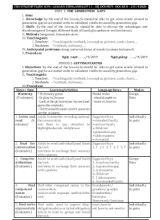
Unit 11 SOURCES OF ENERGY Lesson READING
I. Objectives: By the end of this lesson, students will be able to:
- deduce the meaning of some words in certain context to undersand the passage. - express their own ideas sources of energy. II. Language Focus:
- Grammar: - New words: alternative, reserve, exhaust, released, limited . . . . III. Teaching Aids: cassette player, textbook . . . . IV. Procedures:
Stages/
Time Teacher’s Activities Students’ Activities
Warm – up
(5 minutes)
Sentence Completion -T asks Ss to close their books and complete the sentences on the board. 1. We use ……….. to cook. 2. We use ……….. to run machines, cars, motorbikes. . . -T asks Ss to work in groups and complete the above sentences. -T goes around and controls the activity. * Expected answers: 1. oil, coal, wood, natural gas 2. gas
Ss Ss
S
Pre – reading
(10 minutes)
-T asks Ss some questions to lead in the new lesson. T: Which word is used to describe the group of coal, oil, and natural gas? What do you call the group of oil, coal, natural gas? fossil fuels T: What do you think about fossil fuels? Are they always available? Can future generations continue to use them in the future? T: What should we do to preserve them? We should find new sources of energy which can replace them. T: What are they? geothermal heat, wind energy, water energy, nuclear power, solar energy . . . What is a term for all these new sources? ALTERNATIVE SOURCES OF ENERGY -T asks Ss to work in pairs to look at the picture in the textbook and discuss the questions. What sources of energy does each picture above refer to? * Expected answers: Picture 1: Wind turbine wind power (windmill) Picture 2: Solar panel solar energy, Picture 3: Dam (reservoir) water power (hydroelectric power) Vocabulary Pre-teach + alternative (a): things that can be used instead of something else + reserve (n): supply of something that is available to be used in the future or when it is needed. + to exhaust (v): to run out of, to weaken, to empty + released (a): be free + limited (a)
T Ss
T Ss
S S
T Ss
While – reading
(5 minutes)
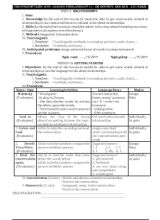
Task 1 – Gap – filling -T asks Ss to work individually to read the passage to guess the meaning of the words in Task 1 in context and complete the sentences. -T tells Ss to compare their answers with each other. -T calls on some Ss to present and explain their answers in front of the class. -T gives feedback and correct answers. * Expected answer:
S
S S
T Ss
ThuVienDeThi.com
Lesson Plan – Grade 11
Teacher in-charge: Nguyen Van Tao
1. released 2. alternative 3. exhausted 4. limited 5. reserve
(9 minutes)
Task 2 – Table Completion -T asks Ss to work in groups of four. -T copies the table on the board. -T asks Ss to scan the passage to find out the advantages and disadvantages of sources of energy. Each group chooses only one of source of energy. -T gives Ss time to read the whole passage. -T goes around the class and provides help if necessary. -T calls on some representatives of groups to act out the activity in front of the class. -T comments and gives the suggested answers. * Expected answer:
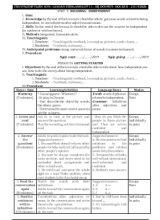
Sources of energy Advantages Disadvantages Nuclear energy unlimited very dangerous
Geothermal heat available only possible in some places
Solar energy plentiful, clean, infinite, safe
possible during the day time Wind power clean and unlimited no wind no energy Water power clean and limited expensive
Ss Ss
T Ss
Ss Ss
Ss Ss
(6 minutes)
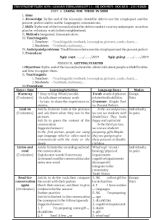
Task 3 – Questions and Answers -T asks Ss to work in pairs to read the text again and answer the questions in Task 3. -T asks Ss to check their answer with other pairs. -T goes around and helps Ss if necessary. -T calls on some pairs to ask and answer the questions in front of the class. -T gives feedback. * Expected answers: 1. Our major source of energy comes from fossil fuels. 2. Five sources …
Trên đây là phần đầu tài liệu — bấm Đọc sách để xem đầy đủ.