
Bài tập về câu trực tiếp gián tiếp Tiếng anh lớp 4
Xem trước nội dung
- 1 -
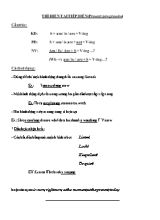
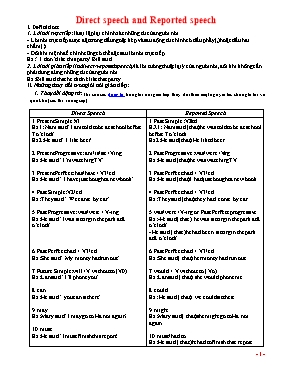
Direct speech and Reported speech I. Definition: 1. Lời nói trực tiếp: là sự lặp lại chính xác những từ của người nói. - Lời nói trực tiếp được đặt trong dấu ngoặc kép và sau động từ chính có dấu phẩy(,) hoặc dấu hai chấm(:). - Đôi khi mệnh đề chính cũng có thể đặt sau lời nói trực tiếp. Ex: “ I don’t like this party” Bill said. 2. Lời nói gián tiếp (indirect/reported speech) là lời tường thuật lại ý của người nói, đôi khi không cần phải dung đúng những từ của người nói. Ex: Bill said that he didn’t like that party. II. Những thay đổi trong lời nói gián tiếp:
1. Thay đổi động từ: Thì của các động từ trong lời nói gián tiếp thay đổi theo một nguyên tắc chung là lùi về quá khứ (các thì xuống cấp):
Direct Speech Reported Speech 1. Present Simple:V1 Ex1: Nam said “I am told to be at school before 7 o’clock” Ex2: He said “ I like beer”
2. Present Progressive: am/is/are +Ving Ex: He said “I’m watching TV”
3. Present Perfect: has/have + V3/ed Ex: He said “ I have just bought a new book”
4. Past Simple: V2/ed Ex: They said “ We came by car ”
5. Past Progressive: was/were + V-ing Ex: He said “I was sitting in the park at 8 o’clock”
6. Past Perfect: had + V3/ed Ex: She said “ My money had run out”
7. Future Simple: will +V without to (V0) Ex: Lan said “I’ll phone you”
8. can Ex: He said “ you can sit here”
9. may Ex: Mary said “I may go to Ha noi again”
10. must Ex: He said “I must finish this report”
1. Past Simple:V2/ed EX1: Nam said (that) he was told to be at school before 7 o’clock. Ex2: He said (that) He liked beer
2. Past Progressive:was/were+Ving Ex: He said (that) he was watching TV
3. Past Perfect: had + V3/ed Ex: He said (that) I had just bought a new book
4. Past Perfect: had + V3/ed Ex: They said (that) they had come by car
5. was/were+V-ing or Past Perfect progressive Ex:-He said ( that ) he was sitting in the park at 8 o’clock” - He said ( that )he had been sitting in the park at 8 o’clock”
6. Past Perfect: had + V3/ed Ex: She said ( that) her money had run out
7. would + V without to ( Vo) Ex: Lan said ( that) she would phone me
8. could Ex : He said ( that) we could sit there
9. might Ex: Mary said ( that) shemight go to Ha noi again
10. must/ had to Ex: He said ( that)he had to finish that report
ThuVienDeThi.com
- 2 -
* Chú ý: Một số trường hợp không đổi thì của động từ trong câu gián tiếp: - Nếu động từ ở mệnh đề giới thiệu được dùng ở thì hiện tại đơn, hiện tại tiếp diễn, hiện tại hoàn thành hoặc tương lai đơn, thì của động từ trong câu gián tiếp vẫn không thay đổi Eg: He says/ he is saying/ he has said/ he will say, “the text is difficult”. He says/ is saying/ has said/ will say (that) the text is difficult.
- Khi câu nói trực tiếp thể hiện một chân lý hoặc một hành động lặp lại thường xuyên, thì của động từ trong câu gián tiếp vẫn không thay đổi Eg: My teacher said “The sun rises in the East” My teacher said (that) the sun rises in the East. He said, ‘My father always drinks coffee after dinner’ He said (that) his father always drinks coffee after dinner
- Nếu lúc tường thuật, điểm thời gian được đưa ra trong lời nói gián tiếp vẫn chưa qua, thì của động từ và trạng từ thời gian vẫn được giữ nguyên Eg: He said, “ I will come to your house tomorrow” He said (that) he will come to my house tomorrow. - Câu trực tiếp có dạng câu điều kiện loại 2 hoặc loại 3:
Eg: He said; “If I knew her address, I would write to her” He said that he would write to her If he knew her address Eg: She said, “If I had enough money, I would buy a new bicycle.” She said (that) if she had enough money, she would buy a new bicycle. Eg: The teacher said, “If John had studied harder, he wouldn’t have failed his exam.” The teacher said (that) if John had studied harder, he wouldn’t have failed his exam. Tuy nhiên nếu lời nói trực tiếp là câu điều hiện loại 1 thì được chuyển sang loại 2 ở lời nói gián tiếp Eg: The advertisement said; “If you answer the questions correctly, you may win one million …
Trên đây là phần đầu tài liệu — bấm Đọc sách để xem đầy đủ.