
Hệ thống từ vựng từ Bài 9 đến 15 trong chương trình Tiếng Anh Lớp 8
Xem trước nội dung
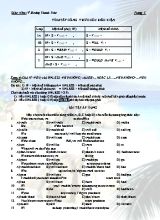
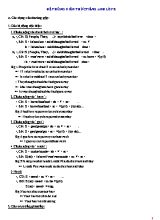
1: Vocabularies from unit 9 to unit 15 (Từ vựng từ bài 9 đến bài 15). 2: Prepositions ( giới từ): * Thời gian * Nơi chốn * Adjectives + giới từ * Averbs + giới từ - keen on, find out, thank for, cheer so up, come out, agree with, point out, proud of, fond of, skeptical about/of, pick so up, interested in, take part in, base on, participate in, think of/about, agree with, calm down, throw away, look forward to, spend on . …. 3: Reported speech: ( Tường thuật lời nói):
S + said + (that) + S + V + O. S + told + O + (that) + S + V + O. S + said + to + O + (that) + S + V + O. * Đổi ĐTNX, ĐTSH, TTSH sao cho tương ứng với chủ ngữ or tân ngữ của mệnh đề chính. - ĐTNX (personal pronouns)
Chủ từ (subject) Tân ngữ (object)
I he, she me him, her
We they us them
You I, we you me, us - ĐTSH (possessive pronouns) - TTSH (possessive adjectives)
mine his, hers my his, her
ours theirs our their
yours mine, ours your my, our
- Khi tường thuật lời nói của chính mình, đại từ và tính từ sở hữu không đổi.
Ex: I said, “ I like my new house”.
I said (that) I liked my new house. - Đổi thì của động từ thành thì quá khứ tương ứng: DIRECT SPEECH INDIRECT SPEECH Present simple Tom said, “I never eat meat.”
Past simple Tom said (that) he never ate meat. Present progressive He said , “I’m waiting for Ann.”
Past progressive He said he was waitting for Ann. Future simple Judy said, “I’ll phone you,”
Future in the past Judy said she would phone me.
Modal verbs + Can She said, “You Can Sit here.”
+ May Claire said, “I may go to Bali again.’
+ Must He said, “I must finish this report.”
Modal verbs + Could She said we could sit there. + Might Claire said she might go to Bali again. + Must/ Had to He said he must/ had to finish that report. - Đổi một số tính từ chỉ định và trạng từ or cụm trạng từ chỉ nơi chốn, thời gian.
DIRECT SPEECH INDIRECT SPEECH
DeThi.edu.vn
This These Here Now Today Yesterday The day before yesterday Tomorrow The day after tomorrow Ago This week Last week Next week
That Those There Then, at that time That day The day before, the previous day Two days before The day after, the next/following day Two days after, in two day’s time Before That week The week before, the previous week The week after, the following week * Chú ý: - Nếu động từ tường thuật ở thì hiện tại thì thì của động từ chính được giữ nguyên khi chuyển lời nói trực tiếp sang gián tiếp.
Ex; “ I am arriving at about 6.00,” she says. She says (that) she is arriving at about 6.00. - Dùng động từ say or tell: say that; say to somebody that; tell somebody that. - Động từ giới thiệu trong lời nói gián tiếp thường ở quá khứ và liên từ that có thể được bỏ. - Tell + tân ngữ (object) thường được dùng hơn say to + tân ngữ. Reported Yes/No questions:
S + asked + O + if / whether + S + Ved/2…
- Muốn đổi câu hỏi Yes/No question từ trực tiếp sang gián tiếp ta cũng phải đổi ba yếu tố giống như câu trần thuật.
* Đổi đại từ nhân xưng,đại từ sở hữu.
* Đổi thì của động từ.
* Đổi trạng ngữ chỉ thời gian,nơi chốn.
* If/ whether: có nghĩa là: “có.......không”.
IV. Present progressive tense with always: (Thì hiện tại tiếp diễn với always): Dùng để than phiền.
S + am/is/are + always + Ving…
- Ba is always forgetting his homework.
- They are always going to school late.
7. In order (not) to + VBI… ( Để / để không)
So as (not) to + VBI…
- Nam gets up early every morning. He doesn’t want to be late for school.
- He moved to the front row. He could hear the speaker better.
- We hurried to school. We didn’t want to be late.
8. Present participle (Hiện tại phân từ):Verb + ing
DeThi.edu.vn
Trên đây là phần đầu tài liệu — bấm Đọc sách để xem đầy đủ.