
Những từ gây nhầm lần trong Tiếng Anh - Phần 1 - Thấm Tâm Vy
Xem trước nội dung
Thẩm tâm Vy, 2020 ENGLISH CONFUSABLE WORDS 1.
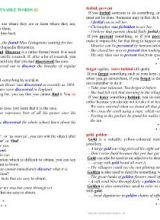
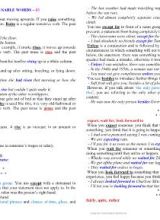
ENGLISH CONFUSABLE WORDS 01 ability, capability, capacity 1. If someone has ability, a particular ability, or the ability to do something, they can do it because they have the skill or the knowledge that is needed to do it. You often use ability to say that someone can do something well. - He had remarkable ability as an administrator. - There are four main factors which determine mathematical ability. - ...the ability to bear hardship. 2. A person’s capability is the amount of work they can do and how well they can do it. - The director has his own ideas both of the role and of the capability of the actor. - It was, in any case, beyond the capability ofone man. 3. If someone has a particular capacity, a capacity for something, or a capacity to do something, they have the characteristics required to do it. Capacity is a more formal word than ability. ...their capacity for being inspired by heroes. ...his capacity always to see the other person’s point of view. able, capable Both able and capable are used to say that someone can do something. When you say that someone is able to do something, you mean that they can do it either because of their knowledge or skill or because it is possible for them to do it. - Breslow wondered if he would be able to climb over the rail. - They must be able to use their profits for new investment. Note that if you use a past tense, you are saying that someone has actually done something. - We were able to reduce costs. When you say that someone is capable of doing something, you mean either that they have the knowledge and skill to do it if they want or need to, or that they are likely to do it - Workers are perfectly capable of running the organizations which employ them. able - She was quite capable of dropping off to sleep. You can also say that someone is capable of a feeling or an action. - I think he’s capable of loyalty and seriousness. - Bowman could not believe him capable of murder. You normally use ‘capable of’ when talking about what something such as a car or machine can do. - ...water turbines, which are capable of producing more economical electricity. - The car was capable of 110 miles per hour. If you describe someone as able or capable, you mean that they do things well and in an intelligent way. There is little difference between the two words when used in this way. - ...the able and methodical King Charles V of France. - This very able man totally failed to see the possibilities of the telephone.
- Newborn babies are more capable than was once thought. - Well, you certainly have a capable gardener there.
* * * actual, real You use actual to emphasize that the place, object, or person you are talking about is the correct or genuine one. For example, if you talk about the actual cost of something, you are talking about what it does cost rather than what it is expected to cost. - ...turning from ratings in the polls to actual performance in elections. - We call the baby Doc. His actual name is Daniel. You can also use actual when you are giving exact information about something, for example the time you take to do something rather than preparing to do it. - The actual boat trip takes about forty-five minutes. You only use actual in front of a noun. You do not say that something ‘is actual’. Something that is real exists and is not imagined, invented, or theoretical. - ...real or imagined feelings of inferiority. - Robert squealed in mock terror, then in real pain. Note that you can use real after a link verb like ‘be’. - What we saw was real. actually, really Actually and really are both used to emphasize statements. Both words can emphasize a whole clause or sentence, or just a word or group of words. You use actually when you are saying what the truth is about something, in contrast to other things that might have been said or thought. - All of the characters in the novel actually existed. - Actually, all pollution is simply an …
Trên đây là phần đầu tài liệu — bấm Đọc sách để xem đầy đủ.