
Những từ gây nhầm lần trong Tiếng Anh - Phần 11 - Thấm Tâm Vy
Xem trước nội dung
Thẩm Tâm Vy, August 25th, 2020 ENGLISH CONFUSABLE WORDS - 11.
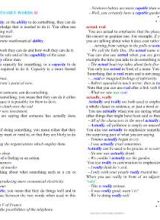
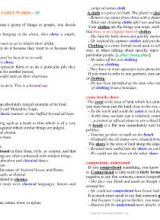
ENGLISH CONFUSABLE WORDS ~ 11 because, as, since, for You can use because, as, since, or for to give an explanation for something or to explain why you say something. Because is the most commonly used word for giving a reason or motive for something, ư someone asks a question beginning with ‘Why?’, you can reply using because. - I said I wouỉdn,t go.—“Why?—'Because I didn’t want to leave you.’ - Why shouldn’t I come?’—'Because you’re too busy.’ If you .have said that something is the case and you want to say why it is the case, you usually add a reason clause beginning with because. - She finally walked off and caught the bus, because she could not really afford to pay both Eileen and a taxi. - 1 couldn’t see Helen’s expression, because her head was turned. You can also use as or since to introduce a reason clause, especially in writing. - A brief note on The National Portrait Gallery’s character is necessary as the word ‘Gallery’can be misleading. - I realize it wouldn’t be in my interests to deceive him since I planned to deal with his bank for many years. The reason clause is sometimes put first - As they have been on the winning side, they may have temptations to extend their borders. - Since evaporated milk is about twice the strength of fresh milk, you always dilute it with at least an equal amount of water. If you want to say that there is a special reason for something, you can use words like ‘especially’ or ‘particularly’ in front of as or since. When you do this, you put the reason clause after the main clause. - I was frightened when I went to bed, especially as my room was so far up. - It was nice to have someone to talk to, particularly as it looked as if I was going to be there all night. In stories, for is used to explain or justify something that has just been said. This is an old-fashioned use. - After a while he seems to feel the need of company again, for he suddenly scrambles back into the kitchen. - The diet we gave her seemed satisfactory, for she grew well.
begin, start, commence If you begin, start, or commence something, you do it from a particular time. There is little difference in meaning between these words, but commence is used in formal English. It is not used in conversation. - I had been asked to chat to the kids before they began lessons for the day. - As they saw him coming they began to dance. - The meeting, then, is ready to begin. - He tore the list from the pad and started a fresh list. - Mrs Bixby put a hand up to her mouth and started backing away.
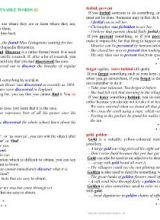
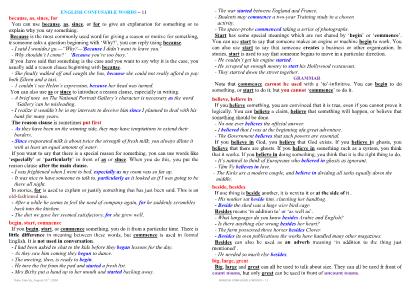
- The war started between England and France. - Students may commence a two-year Training study in a chosen activity. - The space-probe commenced taking a series of photographs. Start has some special meanings which are not shared by ‘begin’ or ‘commence’. You can use start to say that someone makes an enginе or machine begin to work. You can also use start to say that somеопе creates a business or other organization. In stories, start is used to say that someone begins to move in a particular direction. - He couldn’t get his engine started. - He scraped up enough money to start his Hollywood restaurant. - They started down the street together.
GRAMMAR Note that commепсе carmot be used with a ‘to’-infinitive. You can begin to do something, or start to do it, but you cannot ‘commence’ to do it. believe, believe in If you believe something, you are convinced that it is true, even if you cannot prove it logically. You can believe a claim, believe that something will happen, or believe that something should be done. - No one ever believes the official answer. - I believed that I was at the beginning ofa great adventure. - The Government believes that such powers are essential. If you believe in God, you believe that God exists. If you believe in ghosts, you believe that there are ghosts. If you believe in something such as a system, you think that it works. If you believe in doing …
Trên đây là phần đầu tài liệu — bấm Đọc sách để xem đầy đủ.