
Những từ gây nhầm lần trong Tiếng Anh - Phần 16 - Thấm Tâm Vy
Xem trước nội dung
TQT EXTRA COURSE - GRADE TEST No.
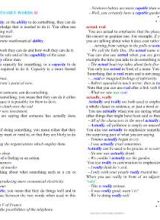
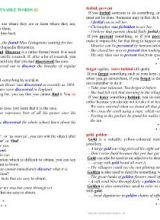
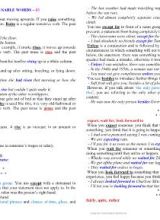
ENGLISH CONFUSABLE WORDS 16 approve, approve of If someone in authority approves a plan or action, they formally agree to it and say that it can happen. For example, if a committee approves a decision, it allows the decision to be acted on. - At least the idea is now accepted and has even been approved by Parliament. - Benn was reluctant to approve projects in case they might not be commercially viable. If someone in authority approves something such as a building or a product, they say that they are satisfied with it and allow it to be used or sold. For example, if a drug is approved, doctors are allowed to treat patients with it - ....premises which have been approved by the local authority. If you approve of an action or event, you are pleased that it has happened or is going to happen. - I don’t like the whole idea, I didn’t approve of this meeting. - His return to the office was widely approved of. If you approve of a person or something such as a book or film, you like and admire them. - ‘Do you think your father wil1 approve of me?” the girl asked. - He did not approve of my pictures. argument, dispute An argument is a disagreement between people who may or may allow each other. People are sometimes calm during an argurnent, but they can become angry. - He and David had been drawn into a ferocious argument. - Money is notorious for causing arguments in marriage. A dispute is a serious argument which can last for a long time. Disputes often take place between organizations, political parties, or countries. When used as a noun, dispute is pronounced /dispju:t/ or /dɪspju:t/. - Disputes over land boundaries, water rights, and debts are commonplace. - A similar dispute divided the party in 1975. You can also talk about a dispute between individuals. - Their dispute raged for a week, Cindy becoming bitchier as it progressed. Dispute is also used as a verb. If you dispute a fact or a claim, you state strongly that you think it is wrong. The verb dispute is pronounced /dispjuzt/. - Some learned historians today dispute his conclusions. - He disputed the legality of the invasion. arrive [đến], reach [đến nơi, đạt đến] You use both arrive and reach to talk about coming to a particular place, often during or at the end of a journey.
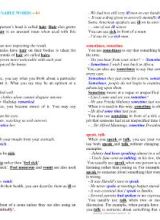
If you have already mentioned the place you are travelling to, you can simply say you arrive. If you want to mention the place, you use arrive, followed by ‘at’ or ‘in’ and the place name. - He was nearly the last to arrive. - They were due to arrive at London Airport at about one o’clock. - That was how I came to arrive in Lexington. You can use arrive to emphasize being in a place rather thantravelling to it. - When I arrived in England I thought I knew English. Reach is always followed by a noun or a pronoun referring to a place. - The weather broke a few days after we reached Zermatt. - Guerrero knew that Flight Two would never reach its destination. You can use reach to emphasize the effort or the long journey required to get somewhere. - To reach it in nine days might not be easy. Arrive at and reach can also be used to say that someone eventually makes a decision or finds the answer to something. - It took us several hours to arrive at a decision. - They were unable to reach a decision. ashamed, embarrassed If someone is ashamed, they feel guilty because they believe they have done something wrong or done something that other people will disapprove of. They are afraid of moral disapproval - She was too ashamed to tell the family of Oliver's crimes. - Inside, she felt ashamed about being a failure. - But almost as my temper flared, I felt ashamed of my lack of control. If someone is embarrassed, they feel upset because they think they have done something which makes them seem foolish. They think that other people will laugh at them or criticize them if they find out. They are afraid of social disapproval. - ‘Did you check the engine?'—‘No,' Brody said, …
Trên đây là phần đầu tài liệu — bấm Đọc sách để xem đầy đủ.