
Grammar for advanced learners All every whole
Xem trước nội dung
ALL EVERY WHOLE
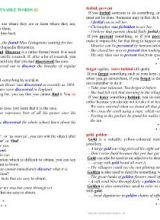
everybody/everyone/everything and all
We say:
Everybody was happy. or Everyone was happy. (not all were happy) He thinks he knows everything. (not knows all) Our holiday was a disaster. Everything went wrong. (not all went wrong) We do not often use all alone in this way. We do not say ‘all were happy’, ‘he knows all’ etc.
We use all in the following ways:
all + noun (all cars, all my money etc.) all of + us/you/them we/you/they … all … (see also Unit 110D) all about … all … = the only thing(s)
All my friends were happy. All of us were happy. We were all happy. He knows all about computers. All I’ve eaten today is a banana. (= the only thing I’ve eaten today)
whole and all
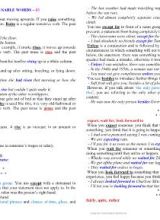
Whole = complete, entire. We use whole mostly with singular nouns:
Did you read the whole book? (= all the book, not just a part of it) Emily has lived her whole life in the same town. I was so hungry, I ate a whole packet of biscuits. (= a complete packet)
We do not normally use whole with uncountable nouns (water, food, money etc.). We say:
Did you spend all the money I gave you? (not the whole money) I read all the information carefully. (not the whole information)
We use the/my/a etc. before whole. Compare whole and all:
I read the whole book. but I read all the information.
B
every day / all day / the whole day
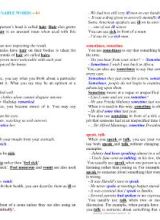
We use every to say how often something happens (every day / every ten minutes etc.):
When we were on holiday, we went to the beach every day. (not all days) The bus service is excellent. There’s a bus every ten minutes. We don’t see each other very often – about every six months.
All day or the whole day = the complete day from beginning to end:
We spent all day on the beach. or We spent the whole day … Dan was very quiet. He didn’t say a word all evening. or … the whole evening. Note that we say all day (not all the day), all week (not all the week) etc.
Compare all the time and every time:
They never go out. They are at home all the time. (= always, continuously) Every time I see you, you look different. (= each time, on every occasion)
C
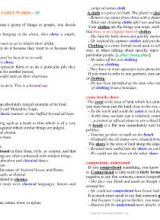
Every/everybody/everyone/everything are singular words, so we use a singular verb:
Every seat in the theatre was taken. Everybody has arrived. (not have arrived)
But we use they/them/their after everybody/everyone:
Everybody said they enjoyed themselves. (= everybody enjoyed himself or herself)
D
A
DeThi.edu.vn
Exercises
nit
1 Complete these sentences with all, everything or everybody/everyone.
1 It was a good party. Everybody had a great time. 2 All I’ve eaten today is a banana. 3 has their faults. Nobody is perfect. 4 Nothing has changed. is the same as it was. 5 Kate told me about her new job. It sounds interesting. 6 Can write their names on a piece of paper, please? 7 Why are you always thinking about money? Money isn’t . 8 I’m really exhausted. I want to do is sleep. 9 When the fire alarm rang, left the building immediately. 10 Amy didn’t say where she was going. she said was that she was going away. 11 We have completely different opinions. I disagree with she says. 12 We all did well in the exam. in our class passed. 13 We all did well in the exam. of us passed. 14 Why are you so lazy? Why do you expect me to do for you?
2 Write sentences with whole.
1 I read the book from beginning to end. I read the whole book. 2 Everyone in the team played well. The 3 Paul opened a box of chocolates. He started eating. When he finished, there were no chocolates left in the box. He ate 4 The police came to the house. They were looking for something. They searched everywhere, every room. They 5 Everyone in Ed and Jane’s family plays tennis. Ed and Jane play, and so do all their children. The 6 Sarah worked from early in the morning until late in the evening.
7 Jack and Lisa had a week’s holiday by the sea. It rained from the beginning of the week to the end of the week. It
Now write sentences 6 and 7 again using all instead of whole. 8 (6) Sarah 9 (7)
3 Complete …
Trên đây là phần đầu tài liệu — bấm Đọc sách để xem đầy đủ.