
Grammar for advanced learners The subjunctive and Unreal uses of past forms - Thấm Tâm Vy
Xem trước nội dung
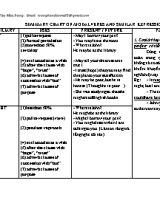
Thẩm Tâm Vy, July 7th, 2019 SUBJUNCTIVE MOOD AND UNREAL PAST
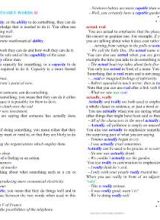
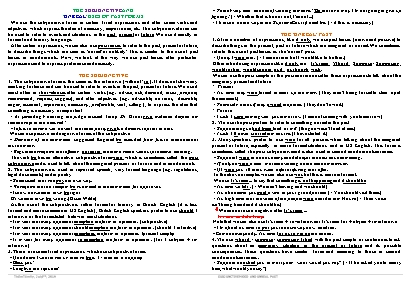
THE SUBJUNCTIVE AND 'UNREAL' USES OF PAST FORMS We use the subjunctive form in certain fixed expressions and after some verbs and adjectives which express the idea of necessity, importance, etc. The subjunctive form can be used to refer to events and situations in the past, present or future. We use it mostly in formal and literary language. After certain expressions, we can also use past tenses to refer to the past, present or future, to describe things which are seen as 'unreal' or unlikely' This is similar to the use of past tenses in conditionals. Now, we look at the way we use past tenses after particular expressions and to express preference and necessity.
THE SUBJUNCTIVE 1. The subjunctive form is the same as the infinitive (without ‘to’). It does not show any marking for tense and can be used to refer to events in the past, present or future. We use it most often in that-clauses after certain verbs (e.g. advise, ask, demand, insist, propose, recommend, request, suggest), and after adjectives (e.g. advisable, anxious, desirable, eager, essential, important, necessary, preferable, vital, willing), to express the idea that something is necessary or important: - At yesterdag's hearing the judge insisted (that) Mr Grant give evidence despite his relationship to the accused' - In future cases it will be vital that each party give full disclosure prior to trial. We can use passive and negative forms of the subjunctive: - Members of the committee suggested England be excluded from future international tournaments. - Regulations require that officers not enter the crime scene without protective clothing. The verb be has an alternative subjunctive form were which is sometimes called the past subjunctive and is used to talk about the imagined present or future and in conditionals. 2. The subjunctive is used in reported speech, very formal language (e.g. regulations, legal documents) and in poetry: - She insisted that she pay her own way. - We require that all receipts be submitted to the committee for approval. - I know not whether laws be right, Or whether laws be wrong. (Oscar Wilde) As the use of the subjunctive is rather formal or literary in British English (it is less formal and more common in US English), British English speakers prefer to use should + infinitive or the forms listed below in most situations: - It is vital that every appticant complete the form in triplicate. (subjunctive) - It is vital that every applicant should complete the form in triplicate. (should + infinitive) - It is vital that every applicant completes the form in triplicate. (present simple) - It is vital for every applicant to complete the form in triplicate. (for + subject + to- infinitive) 3. There are some fixed expressions which use subjunctive forms: - If he doesn't want to see us, then so be it. (= then let it happen) - Bless you! - Long live the republic!
- 'There's very little chance of winning this case.' 'Be that as it may, I'm not going to give up fighting.' (= Whether that is true or not, I'm not ...) - I'll take it all the way to the Supreme Court if need be. (= if this is necessary)
THE 'UNREAL' PAST 1. After a number of expressions, like if only, we use past tenses (active and passive) to describe things in the present, past or future which are imagined or unreal. We sometimes refer to this use of past tenses as the 'unreal' past. - If only I were thin. (= I am not thin but I would like to be thin.) Other introducing expressions like if only are: It's time, What if, Suppose / Supposing , would rather, would sooner, as if , as though, wish. We can use the past simple or the past continuous after these expressions to talk about the imaginary present and future: * Present: - It's time they were forced to clear up the mess. (They aren't being forced to clear up at the moment.) - These kids act as if they owned the place. (They don't own it.) * Future: - I wish I were …
Trên đây là phần đầu tài liệu — bấm Đọc sách để xem đầy đủ.