
Grammar for advanced learners Using to - Infinitive clauses as subject or object - Thấm Tâm Vy
Xem trước nội dung
Thẩm Tâm Vy, 30th, 2019 GRAMMAR NOTES FOR ADVANCED LEARNERS
USING TO-INFINITIVE CLAUSES AS SUBJECT OR OBJECT
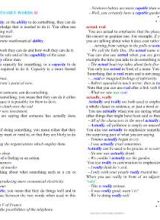
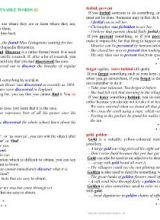
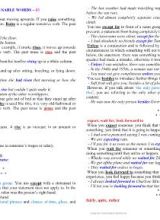
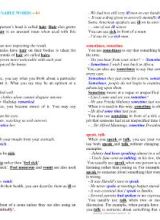
You can place a to-infinitive clause after nouns or pronouns in order to show what the thing referred to is intended to do. - The government set up a programme to develop new varieties ofcorn. - We need employees to work in the new call centre. - They gave me a call to check if I would consider rejoining the team. - He was looking for someone to organize the tennis tournament. You can refer to something or someone that should or can have something done to them by using a clause containing a to-infinitive after a noun or indefinite pronoun. - I make lists in the front of my diary of things to be bought. - She recruited local people to be trained in Hong Kong. - There were fences to be mended and tiles to be repaired. You can use a clause consisting of a to-infinitive followed by a preposition. - There wasn’t even a chair to sit on. - He had nothing to write with. - Leila was glad to have someone to talk to. - At least we now have a goal to aim at. - She had everything in the world to live for. A to-infinitive clause can be used when you want to say what you are talking about, for example, the first, oldest, or only person who did something. For example: - Maureen Stuart was the first woman to be elected to the council. - Reagan had become, at seventy-four, the oldest man ever to hold the presidency. - Of the seven children born to the Gibbons, Edward was the only one to survive to adulthood. A clause containing a to-infinitive is used after some abstract nouns to show what action they relate to. - Adults who didn’t have the chance to go to school when they were children can go to night school. - She resisted the desire to let her eyes close again. - Idoia welcomed any opportunity to practise her English.
PRACTICE
Exercise 1. Match the sentence halves. 1. Javier is happy with his life; he wants 2. John likes horses but doesn't know 3. Elsa hasn't booked a holiday yet because she hasn't decided 4. There's a party at a club in town tonight and I've invited 5. The sports centre also provides 6. Flat-hunting is hard work, but if I don't hurry I'll never find
a. where to go.
b. nothing about it to change. c. somewhere to eat and drink, d. a place to live. e. how to ride. f. loads of friends from college to come. Exercise 2. Decide if the pairs of sentences have the same meaning. 1. A. For Jim to be so friendly was a rare event. B. Jim is not often so friendly. 2. A. The desire to go surfing suddenly left him. B. He suddenly lost the desire to go surfing. 3. A. She felt a sudden need to laugh, despite the serious situation. B. The situation was so serious that she couldn't laugh. 4. A. All the children left of the meal was a mess to clear up. B. Every child helped clear up the mess after the meal. Exercise 3. Write the simple past form of the verb in brackets to complete each sentence. 1. The only thing I need now is something.................... (drink). 2. Books to read on the beach.................... (be) selling well at the moment. 3. It must be hard to find a place.................... (stay) when you're in the jungle. 4. The plan to build a skate park in Morley Park.................... (be) announced a few hours ago by the city council. 5. I live a long way from my mum and I miss having her.................... (talk) to. 6. On the first day of the course, Selma.................... (not know) where to go for classes but she soon found out. Exercise 4. Put each sentence into the correct order. 1. dolphins / in their / To see /. / natural environment / magical / was 2. is on / page 45 / The text / to read for homework /. 3. to look after / sick /. / The hospital I needs I two nurses / children 4. anyone / doesn't / Stefan / to sit / in his seat I. I like 5. so much /To win I make / would / happy /. I anyone / money 6. was what / this moment /. / he / Something tasty / wanted most at / to eat 1. . …
Trên đây là phần đầu tài liệu — bấm Đọc sách để xem đầy đủ.