
Đề thi khảo sát Lớp 12 môn Tiếng Anh - Mã đề 856 - Năm học 2019-2020 - Trường THPT Thăng Long
Xem trước nội dung
SỞ GIÁO DỤC VÀ ĐÀO TẠO HÀ NỘI
TRƯỜNG THPT THĂNG LONG
ĐỀ THI KHẢO SÁT LỚP 12 NĂM HỌC 2019 – 2020
MÔN: TIẾNG ANH Thời gian làm bài: 60 phút, không kể thời gian phát đề ĐỀ CHÍNH THỨC (Đề thi có 04 trang)
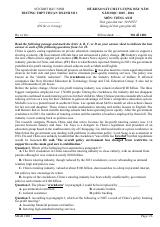
Họ và tên thí sinh:........................................................................ Số báo danh:................................................................................ Read the following passage and mark the letter A, B, C, or D on your answer sheet to choose the word or phrase that best fits each of the numbered blanks from 1 to 5. Good gift giving is an art. The perfect present can lift a mood or improve a relationship. It can repair a wrongdoing, or simply remind a loved one that you care. Psychologists have long been fascinated by the subject of gifting, because it's a window into so many other important human traits: how we see others, how we assign value to things, our (1)________skills and our ability empathize. From sausages to silk flowers, you too can shop like the Queen. "Humans are an incredibly social species and one of the things that set us apart is forming and maintaining relationships with others. Gift giving around holidays, birthdays, graduations or weddings (2)________a great opportunity to (3)________those relationships," said Daniel Farrelly, a psychologist at the University of Worcester. Gifting has also become a high stakes business. This year in the US, for example, consumers estimate they will spent $942 on Christmas gifts, up from $885 in 2018. (4)________total, gift expenditure is expected to surpass $1 trillion. Getting it wrong can come at an increasingly high price. (5)________the occasion, gift giving is a social ritual that requires careful thought and consideration. So are there a set of rules to follow? We spoke to some experts to help us craft a simple guide to gifting. (Adapted from https://edition.cnn.com/style/article/rules-of-gift-giving-scn/index.html)
Question 1: A. decide-made B. decisive-making C. decision-make D. decision-making
Question 2: A. is B. to be C. have been D. are
Question 3: A. ease B. reinforce C. weaken D. lessen
Question 4: A. Beyond B. At C. In D. By
Question 5: A. Whoever B. Wherever C. However D. Whatever Mark the letter A, B, C, or D on your answer sheet to indicate the sentence that is closest in meaning to each of the following questions. Question 6: Had she read the reference books, she would have been able to finish the test.
A. If she had read the reference books, she could finish the test. B. Because she read the reference books, she was able to finish the test. C. Not having read the reference books, she couldn't finish the test. D. Although she didn’t read the reference books, she was able to finish the test. Question 7: After the members of the committee had had lunch, they discussed the problem. A. Having been served lunch, the committee members discussed the problem. B. Having been served lunch, the problem was discussed by the members of the committee. C. Having been served lunch, a discussion of the problem was made by the members of the committee. D. Having been served lunch, it was discussed by the committee members of the problem. Question 8: Many countries share the view that drastic measures must be taken to stop the pollution of the seas. A. The pollution of the seas can only be prevented provided that many countries follow the same policy. B. A lot of countries agree that it is essential to take strong action to put an end to the pollution of the seas. C. The seas will, it seems, continue to be polluted unless this agreement is accepted by a majority of the
countries. D. By putting into practice a series of precaution it is generally believed that the pollution of the seas will be
prevented. Mark the letter A, B, C, or D on your answer sheet to indicate the underlined part that needs correction in each of the following questions. Question 9: Students (A) suppose to read (B) all the questions carefully and find (C) out …
Trên đây là phần đầu tài liệu — bấm Đọc sách để xem đầy đủ.