
Nâng cao vốn từ theo chủ đề trọng điểm Family and relationships Cô Vũ Mai Phương
Xem trước nội dung
PRO3M & PRO 3MPLUS: LỘ TRÌNH TOÀN DIỆN – ÔN LUYỆN CHUYÊN SÂU CHO KÌ THI THPT & ĐGNL Theo dõi Fanpage : Học Tiếng Anh cùng cô Vũ Mai Phương để học GIỎI TIẾNG ANH HƠN mỗi ngày cùng cô.
ĐĂNG KÍ PRO 3M & PRO 3MPLUS ĐỂ CHINH PHỤC ĐIỂM 9+ MÔN TIẾNG ANH CÙNG CÔ VŨ MAI PHƯƠNG
167 ĐIỂM 10 MÙA THI 2021-2024 & 3612 ĐIỂM 9+ TIẾNG ANH MÙA THI 2023-2024
Cô Vũ Thị Mai Phương
CHUẨN BỊ CHO KÌ THI TỐT NGHIỆP THPT & ĐGNL
NÂNG CAO VỐN TỪ VỰNG THEO
CHỦ ĐỀ TRỌNG ĐIỂM:
CHỦ ĐỀ : Family and relationships
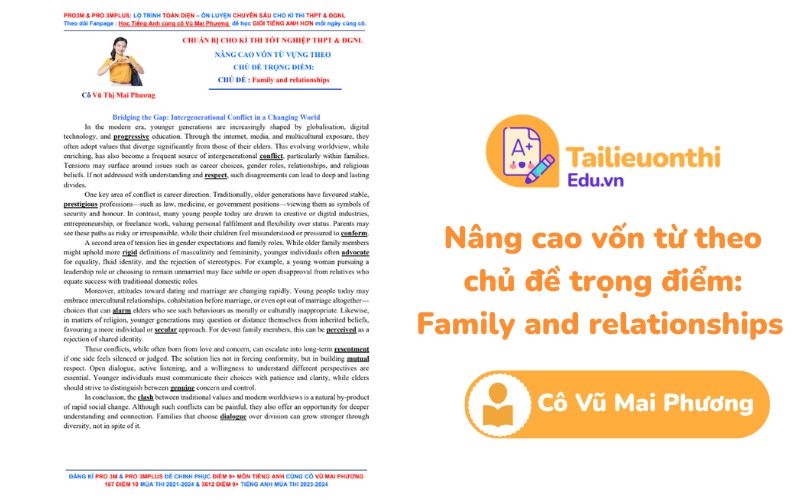
Bridging the Gap: Intergenerational Conflict in a Changing World In the modern era, younger generations are increasingly shaped by globalisation, digital technology, and progressive education. Through the internet, media, and multicultural exposure, they often adopt values that diverge significantly from those of their elders. This evolving worldview, while enriching, has also become a frequent source of intergenerational conflict, particularly within families. Tensions may surface around issues such as career choices, gender roles, relationships, and religious beliefs. If not addressed with understanding and respect, such disagreements can lead to deep and lasting divides.
One key area of conflict is career direction. Traditionally, older generations have favoured stable, prestigious professions—such as law, medicine, or government positions—viewing them as symbols of security and honour. In contrast, many young people today are drawn to creative or digital industries, entrepreneurship, or freelance work, valuing personal fulfilment and flexibility over status. Parents may see these paths as risky or irresponsible, while their children feel misunderstood or pressured to conform.
A second area of tension lies in gender expectations and family roles. While older family members might uphold more rigid definitions of masculinity and femininity, younger individuals often advocate for equality, fluid identity, and the rejection of stereotypes. For example, a young woman pursuing a leadership role or choosing to remain unmarried may face subtle or open disapproval from relatives who equate success with traditional domestic roles.
Moreover, attitudes toward dating and marriage are changing rapidly. Young people today may embrace intercultural relationships, cohabitation before marriage, or even opt out of marriage altogether— choices that can alarm elders who see such behaviours as morally or culturally inappropriate. Likewise, in matters of religion, younger generations may question or distance themselves from inherited beliefs, favouring a more individual or secular approach. For devout family members, this can be perceived as a rejection of shared identity.
These conflicts, while often born from love and concern, can escalate into long-term resentment if one side feels silenced or judged. The solution lies not in forcing conformity, but in building mutual respect. Open dialogue, active listening, and a willingness to understand different perspectives are essential. Younger individuals must communicate their choices with patience and clarity, while elders should strive to distinguish between genuine concern and control.
In conclusion, the clash between traditional values and modern worldviews is a natural by-product of rapid social change. Although such conflicts can be painful, they also offer an opportunity for deeper understanding and connection. Families that choose dialogue over division can grow stronger through diversity, not in spite of it.
Trên đây là phần đầu tài liệu — bấm Đọc sách để xem đầy đủ.

.jpg "Tàiliệu ôn tập Tiếng Anh Lớp 12 Biếnđốicâu (Sentence transformation)")